

Red/Blue Strobe Lights
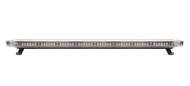
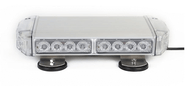
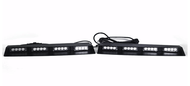
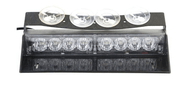
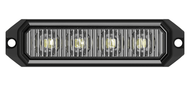
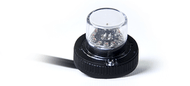
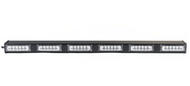
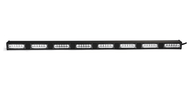
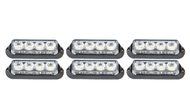
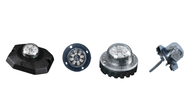
Red and blue LED strobe lights are commonly used when a vehicle needs immediate, high recognition warning for emergency response, traffic stops, and incident scenes. Shoppers typically choose red and blue lights for marked patrol vehicles, unmarked and undercover units, fire and rescue command vehicles, and EMS response platforms where fast driver awareness matters. Extreme Tactical Dynamics helps you shop by mount type so you can build the right coverage for your vehicle, whether you need a compact dash or visor setup, exterior grille and surface mount lighting, hideaway strobes for stealth installs, or a roof mounted mini or full size light bar. Serving first responders and professionals since 2005. Check local and state regulations for authorized use.
Shop by Category




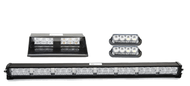
Shop Additional Colors
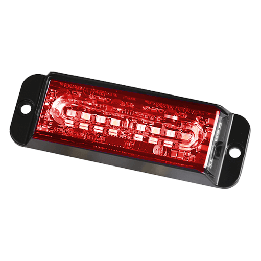
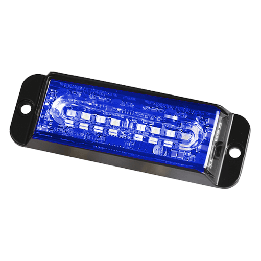
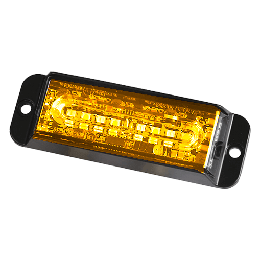
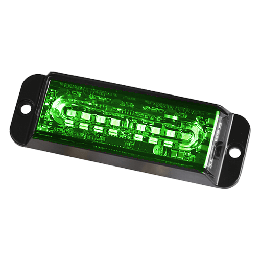
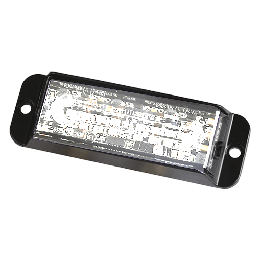
What Are Red and Blue LED Strobe and Warning Lights?
Red and blue LED strobe lights are emergency and warning lights that flash in attention getting patterns to improve visibility in traffic and at scenes. On this page, the goal is not to explain color meaning as a universal rule, because usage and restrictions vary, but to help you choose the right product type for your vehicle and operating needs.
Most buyers are deciding between a single primary warning product, like a roof light bar, versus a modular build that layers multiple mounting locations. Modular systems often combine an interior warning light (dash or visor) with exterior coverage (grille and surface mounts) plus rear visibility, which can be a practical way to increase recognition without changing the vehicle’s roof profile.
Shop Red and Blue Lights by Product Type
Start by choosing where you want the light to live on the vehicle: inside the windshield, on the grille, inside the headlight or taillight housing, or on the roof. Then choose how much coverage you need: front only, rear only, or 360 degree presence. Use the sections below to match your mission to a product type, then click into the correct category to shop the product grid by size, mount style, and feature set.
Red and Blue Dash and Deck Lights
Dash and deck lights are ideal when you want strong forward or rear warning without a roof mounted bar. They are commonly used for slick top builds, admin vehicles, and unmarked units because they mount inside the vehicle and can be removed or repositioned depending on design. They also pair well with exterior grille lights to strengthen intersection visibility.
Shop Red and Blue Dash and Deck Lights.
Red and Blue Visor Light Bars
Visor light bars mount high in the windshield area to create eye level warning that reads clearly in traffic. They are a common choice for unmarked and supervisor builds that want a clean exterior profile while maintaining strong front coverage. If you operate in dense traffic, visor lights are often used as the primary forward warning, with exterior modules added for side angle coverage.
Shop Red and Blue Visor Light Bars.
Red and Blue Grille and Surface Mount LED Lights
Grille and surface mounts are the workhorse category for building a balanced red/blue system. They add low, forward facing punch that helps at intersections and in daytime conditions, and they can be placed at corners and rear positions to reduce blind angles. If you are building modular coverage, this is usually the category that turns a front heavy setup into a complete system.
Shop Red and Blue Grille and Surface Mount Lights.
Red and Blue Hideaway Strobe Lights
Hideaway lights install inside existing headlight or taillight housings for a stealth look when turned off and strong warning output when activated. They are commonly chosen for undercover and administrative vehicles, and they also work well as supplemental rear or corner warning on marked units. Hideaways are a good fit when you want high impact without external housings on the vehicle body.
Shop Red and Blue Hideaway Strobe Lights.
Red and Blue Mini Light Bars
Mini light bars provide roof level visibility in a smaller footprint than a full size bar. They are frequently used on command vehicles, quick response units, and smaller fleets where a compact roof solution is preferred. If you want a single primary warning product but do not need a full length bar, a mini bar can be a practical starting point and can be supplemented with grille and rear warning later.
Shop Red and Blue Mini Light Bars.
Red and Blue Full Size Roof Light Bars
Full size roof light bars are designed for maximum 360 degree warning and long range recognition. They are commonly chosen when roadway presence matters most, such as primary response vehicles operating in dense traffic or at speed. If you want the most complete single component solution, a roof bar is typically the fastest way to achieve broad coverage, with optional rear directional control added if needed.
Shop Red and Blue Full Size Roof Light Bars.
Red and Blue Traffic Advisor Light Bars
Traffic advisors are designed to direct vehicles left, right, or away using directional patterns. They are a strong add on when you routinely manage traffic flow during incidents, lane closures, or roadside stops. Many buyers pair a traffic advisor with rear warning to improve clarity for approaching drivers and reduce last second braking or confusion behind the vehicle.
Shop Red and Blue Traffic Advisors.
Red and Blue Interior and Exterior Light Bars
Interior and exterior light bars provide flexible placement options depending on the vehicle and build style. They are useful for distributing warning across front and rear windows, partitions, or exterior mounting points when you want a lower profile system than a roof bar. This category is a good fit for phased builds that add coverage in stages while keeping the install clean and consistent.
Shop Red and Blue Interior and Exterior Light Bars.
Red and Blue Dual Color Emergency Vehicle Lights
Dual color product families can help standardize a build across multiple mounting points when you want consistent control behavior and coordinated warning. This approach is common for fleets and agencies that want a uniform look across vehicles and a clean upgrade path over time. If you plan to add modules later, choosing a dual color ecosystem can make expansion simpler.
Shop Red and Blue Dual Color Emergency Vehicle Lights.
Popular Vehicles and Industries for Red and Blue Lights
Police and Law Enforcement Vehicles
Red and blue lighting is strongly associated with law enforcement visibility, especially in intersection heavy routes, traffic enforcement, and roadside stops. The most effective systems are usually layered: a clear front warning signal, corner coverage to reduce side angle blind spots, and rear warning for stops. If you want to shop by profession and use case, start with Police Lights.
Undercover and Unmarked Units
Unmarked builds typically prioritize interior mounting and stealth installs, such as visor, dash and deck, and hideaway lighting. The goal is high recognition when activated while keeping the vehicle profile discreet at other times. A common approach is interior front warning plus a small number of exterior modules for intersection coverage. For undercover focused options, see Undercover Cop Lights.
Fire and Rescue Command Vehicles
Command and supervisor vehicles often need strong visibility at scenes while balancing glare control and install practicality. Many builds emphasize rear visibility for roadside incidents and add front warning for intersection approaches. If your department uses red/blue on command vehicles or support units, choose mounts that support broad coverage and durable placement.
Shop Fire Lights.
Ambulance, EMT, and EMS Response Vehicles
EMS response vehicles need immediate recognition in congestion, poor weather, and highway traffic. Buyers often prioritize wide coverage and clean control logic so front, rear, and directional needs can be managed quickly. If you are outfitting an ambulance or EMS support vehicle, compare roof and modular options based on how frequently you operate at scenes and in traffic.
Shop Ambulance LED Lights and Sirens.
Volunteer Firefighter POV Response
POV authorization and color restrictions vary heavily by state, county, and department policy. If you are authorized to use emergency lighting on a personal vehicle, the safest builds tend to be controlled and purpose driven, with clear forward warning and minimal confusion for other drivers. Use volunteer focused shopping paths as a starting point at Volunteer firefighter lights.
Security and Property Patrol
Some organizations search for red and blue lights for controlled environments, but red/blue use may be restricted and may not be appropriate for many private uses. If your goal is visibility for property patrol, event routing, or controlled access areas, confirm the rules that apply to where you operate before selecting a color combination. When in doubt, focus on compliant warning solutions that match your permitted use.
Quick match (common red/blue build patterns)
- Slick top or unmarked: visor or dash plus hideaways or surface mounts, then add rear warning for stops
- Marked response: roof bar for 360 degree presence, plus grille or corner modules to strengthen intersection visibility
- Highway and incident work: strong rear warning plus a traffic advisor for clearer lane control
Mounting Locations and Coverage Tips
Start with the traffic you most need to influence: oncoming vehicles, cross traffic at intersections, or vehicles approaching from behind. Front only systems can look bright head on but still fail at intersections if there is no corner coverage, and rear only systems can leave you exposed during stops if drivers do not recognize you early enough.
Interior versus exterior matters. Interior dash and visor lights are protected from weather and are easier to remove or reposition, but they can produce glare if the angle is wrong or if the windshield and dashboard reflect the output. Exterior grille and surface mounts add low angle punch that can be easier for other drivers to interpret at intersections, and they help reduce over reliance on a single interior light.
Permanent versus temporary mounting should match how the vehicle is used. Dedicated duty vehicles typically benefit from hard mounted, hardwired installs for reliability and consistent aiming. Temporary or shared vehicle setups may prioritize quick mount styles, but stability and aiming still matter because a poorly aimed light loses effective coverage.
At a high level, most systems operate on standard 12V vehicle power and are controlled by switches or controllers. If you are building a multi point system, plan control logic early so you can activate front, rear, and directional functions without confusion. A simple experience based rule is to build outward from the highest value location: add front warning first, then rear warning for stops and scenes, then corner coverage to improve intersection recognition.
Compliance, Visibility, and Color Rules
Red and blue lighting is often restricted to authorized emergency response and law enforcement use, and the rules can vary by state, municipality, and agency policy. Even when a color combination is commonly associated with a role, that does not mean it is permitted for every vehicle or every use case. If you are shopping red and blue strobe lights, confirm that you are authorized for your application before installing or activating the system.
For broader shopping across all warning light types and mounting styles, you can browse the main LED strobe catagory. Then verify your local requirements using the State Statutes hub. This is a general guide, not legal advice.
Choosing the Right Red and Blue Setup (Decision Rules)
- If you need maximum 360 degree presence, then choose a full size roof light bar and add grille or corner modules for intersection punch.
- If you want a compact roof solution, then choose a mini light bar and add rear warning if you do traffic stops or roadside scenes.
- If you are building a slick top or unmarked vehicle, then start with visor or dash and deck lights and add hideaways for stealth coverage.
- If you want the most flexible modular build, then start with grille and surface mounts and add interior warning where it improves line of sight.
- If rear safety during stops is a priority, then add rear deck or rear facing modules before adding more front output.
- If you work intersections frequently, then prioritize corner placement so cross traffic sees the warning earlier.
- If glare is a problem, then reduce interior intensity and shift some output to grille and surface mounts for outward projection.
- If you manage lane movement at scenes, then add a traffic advisor for clearer directional control.
- If you are outfitting a fleet, then standardize around a dual color product family for consistent control and easier expansion.
- If you are unsure where to start, then pick the mount you can install cleanly and expand coverage in phases: front, rear, then corners.
Once you know your build style, return to the “Shop Red and Blue Lights by Product Type” section above and choose the category that matches your mounting location.
Shop By Color: Explore More LED Strobe Light Options
- Red LED Strobe Lights
- Blue LED Strobe Lights
- Amber LED Strobe Lights
- Green LED Strobe Lights
- White LED Strobe Lights
- Red and White LED Strobe Lights
- Red and Amber LED Strobe Lights
- Blue and White LED Strobe Lights
- Blue and Amber LED Strobe Lights
- Amber and White LED Strobe Lights
- Green and White LED Strobe Lights
- Green and Amber LED Strobe Lights
Frequently Asked Questions About Red and Blue Lights
Are red and blue lights legal on a personal vehicle?
In many places, red and blue lighting may be restricted to authorized emergency response and law enforcement use, and rules can vary by state and local policy. If you are searching “red and blue lights for car,” verify authorization before installing or activating anything. Use the state statutes hub to check your jurisdiction and follow agency or department policy when applicable.
What is the best red and blue light bar option for maximum visibility?
If you want the strongest single component solution, a full-size roof light bar typically provides the most complete 360 degree coverage. If roof mounting is not ideal for your vehicle, a mini bar can be a compact alternative, and modular builds can still reach strong coverage by combining interior warning plus exterior modules. Choose based on roof space, vehicle use, and the coverage you need.
Should I choose a visor light, dash light, or grille lights for red and blue strobe lights?
Choose visor lights when you want high, eye level front warning with a clean interior mount. Choose dash and deck lights when you need flexible front or rear interior coverage, especially for slick top and unmarked vehicles. Choose grille and surface mounts when you want exterior durability, stronger intersection punch, and the ability to build corner and rear coverage over time.
Where should I mount red and blue strobe lights for traffic stops and roadside scenes?
For roadside safety, rear visibility matters as much as front visibility. A common approach is front warning through a visor or dash system, then rear warning through rear window, rear facing modules, or directional control if you are managing traffic flow. Add corner placement when you want better intersection recognition and wider angle coverage.
Do red and blue strobe lights work well in bad weather, and what should I look for?
Visibility can change based on rain, fog, snow, and ambient lighting, so the key is coverage and placement rather than assuming one mount solves everything. Look for products designed for vehicle duty use and install them where the light projects outward with clear angles. If interior glare is a problem, shift part of the system to exterior modules for cleaner projection.
Red and blue lights vs amber warning lights, which should I buy?
Amber is commonly used for caution and work zone visibility, while red and blue is often associated with emergency response roles and may be restricted depending on where you operate. The right choice depends on authorization, your mission, and your operating environment. If your primary need is roadside caution, amber or amber and white may be more appropriate, but confirm local rules either way.
Can I build a red and blue setup without a roof light bar?
Yes. Many buyers build modular systems using dash or visor lights for forward warning, grille and surface mounts for intersection punch, and additional rear warning for stops. This approach can keep the roof profile clean while still creating strong multi angle visibility. Start with the mounting locations your vehicle supports cleanly, then expand coverage in phases.
What does “dual color” mean for red and blue emergency lights?
Dual color typically means a product can output more than one color and may allow different modes depending on the controller and product design. It can simplify standardization across a build when you want consistent behavior and coordinated warning across multiple mounting points. Since implementations vary by product, focus on how you want to control the system and whether you want a consistent ecosystem for future expansion.