


Georgia Emergency Vehicle Light State Statutes
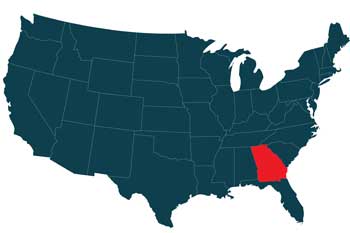 Georgia strictly separates emergency signaling from caution lighting. Blue-light devices are generally restricted to law enforcement or specifically permitted vehicles, red flashing or revolving lights require emergency-vehicle authorization unless an exemption applies, and flashing or revolving green lights are generally prohibited on public property except for a governmental command post at an emergency scene. Georgia made a major change on July 1, 2024: amber flashing or revolving lights no longer require a state light permit. Instead, O.C.G.A. § 40-8-35 identifies the vehicles that must use amber while performing listed highway activities, and Georgia DPS makes clear that amber does not create emergency-vehicle status. Georgia DPS vehicle-light permit guidance.
| Vehicle or industry type | Permitted or required colors | Core rule or limitation | Statute or authority |
|---|---|---|---|
| Police / law enforcement | Blue; red when authorized | Blue devices are tightly restricted. Marked law-enforcement vehicles do not need a blue-light permit. Emergency driving privileges require the signals specified by § 40-6-6. | DPS Red & Blue Light Permit |
| Fire | Red; amber when § 40-8-35 conditions apply | Distinctly marked fire department vehicles do not need a red-light permit. Amber is activity-based and permit-free. | DPS permit guidance; Rule 570-11 |
| EMS / ambulance | Red; amber when applicable | State-licensed ambulances covered by § 40-8-92 do not need a red-light permit. Blue is not a general EMS authorization. | DPS Red & Blue Light Permit |
| Volunteer responder / POV | Red with authorization | Volunteer firefighters may qualify for red-light designation through the DPS process and Rule 570-11-.03. A personal vehicle is not approved for blue merely because the driver is a volunteer responder. | Ga. Comp. R. & Regs. 570-11-.03 |
| Tow / road service | Amber required in listed operations | Tow, wrecker, and emergency-road-service vehicles must use amber in the conditions listed by § 40-8-35. No amber permit is required after June 30, 2024. | HB 1193 / DPS Amber guidance |
| Construction / maintenance | Amber required during covered work | Authorized road-construction or maintenance vehicles and equipment must use amber while operating under § 40-8-35 conditions. | HB 1193 / O.C.G.A. § 40-8-35 |
| Utility | Amber required while providing utility services | Utility service vehicles must use amber while providing covered utility services on highways. | HB 1193 / O.C.G.A. § 40-8-35 |
| Pilot / escort | Amber required for covered escort operation | Escort vehicles operating under the oversize-load provision are among the vehicles required to use amber under § 40-8-35. | HB 1193 / O.C.G.A. § 40-8-35 |
| Private security | Amber authorized and required in covered highway operation | Vehicles operated by licensed or registered private detective or security businesses are included in § 40-8-35. Red and blue are not general security-vehicle colors. | HB 1193 / O.C.G.A. § 40-8-35 |
Blue and red lights: who can use them?
Georgia treats blue as a law-enforcement identifier. O.C.G.A. § 40-8-90 makes it unlawful, subject to narrow exceptions, to operate a motor vehicle equipped with or containing a device capable of producing blue light, whether flashing, blinking, revolving, or stationary. The principal exceptions cover vehicles owned or leased by federal, state, or local law-enforcement agencies, vehicles carrying a state-agency permit, and a narrow antique or special-interest rear-lamp exception. A violation of the ordinary blue-light restriction is a misdemeanor, and using a blue-light-equipped vehicle during a felony carries the statute’s enhanced punishment.
Red is governed through the emergency-vehicle designation system in O.C.G.A. § 40-8-92. A red flashing or revolving light generally requires a DPS designation based on proven need, with marked fire vehicles and qualifying state-licensed ambulances exempt from the red permit. Marked law-enforcement units are exempt from the blue permit. For agencies buying police lights or fire truck lights, product availability does not establish legal authority. The vehicle and operator must independently qualify under Georgia law.
Amber lights changed in 2024
Georgia no longer issues or requires amber flashing or revolving light permits. HB 1193 took effect July 1, 2024, removed amber from the emergency-light permit framework, and rewrote O.C.G.A. § 40-8-35 around vehicle type and operating condition. Georgia DPS stopped accepting amber permit applications after June 30, 2024. This directly replaces the old annual-permit advice that still appears on older Georgia materials.
Section 40-8-35 now requires amber lights for listed highway operations, including tow and road service at specified accident, disablement, towing, or protruding-load conditions; utility service; authorized road construction and maintenance; active sanitation; projecting or oversize loads; qualifying escort operations; licensed private security; neighborhood watch vehicles meeting the statute; and several other defined categories. Amber equipment must be mounted so it is visible from 500 feet to the front and rear under normal atmospheric conditions. Operators comparing Georgia-appropriate amber warning options should still match the equipment to the exact activity covered by law.
Police, fire, EMS, and emergency driving privileges
Georgia’s emergency-driving privileges are conditional, not automatic. Under O.C.G.A. § 40-6-6, an authorized emergency vehicle may exercise limited traffic-law privileges while responding to an emergency call, pursuing a suspected violator, or responding to a fire alarm, but not when returning from a fire alarm. The statute still requires due regard for safety.
The warning-signal rule is also specific. For most authorized emergency vehicles, the privileges apply when the vehicle is using an audible signal and a flashing or revolving red light visible 500 feet to the front. A law-enforcement vehicle uses the required audible signal and a flashing or revolving blue light visible 500 feet to the front. This is why the older Georgia page’s statement that police emergency privileges depend on red lights is no longer an acceptable summary.
Volunteer firefighter and privately owned responder vehicles
Georgia permits a volunteer firefighter to seek red-light emergency-vehicle designation, but the authorization is not automatic. Current Georgia DPS Rule 570-11-.03 requires a red-light applicant to document the emergency use, submit the required fee unless exempt, and provide evidence of completing a DPS-approved Due Regard Training Program. A volunteer-firefighter applicant must also provide an affidavit of active membership in a bona fide volunteer fire department, obtain the required local official or fire-authority signature, and be at least 18 years old.
Georgia DPS states that personal vehicles will not be approved for blue flashing or revolving lights. A volunteer POV therefore should be treated as a red-light permit question, not as a general first-responder blue-light exception. Local department policy can be stricter than the statewide permit rules.
Tow trucks and roadside recovery
Georgia requires tow, wrecker, and emergency-road-service vehicles to use amber warning lights in the operating conditions listed in O.C.G.A. § 40-8-35, such as at an accident or disablement scene, while towing with a wheel of the towed vehicle on the pavement, or while carrying a protruding object that creates a hazard. The rule is activity-based, and amber does not give the operator emergency right-of-way privileges. ETD’s lighting for tow and recovery fleets is a commercial equipment reference only.
A notable 2026 bill would have changed this. SB 569 passed the General Assembly and would have allowed qualifying towing service companies to seek emergency-vehicle light permits under specified program, contract, and training conditions. Governor Brian Kemp vetoed SB 569 on May 12, 2026. The proposal therefore did not become law, and it should not be described as current towing authority.
Construction, maintenance, and utility vehicles
 Georgia requires amber flashing or revolving lights on vehicles or equipment used for authorized road construction or maintenance while operating under § 40-8-35, and on utility service vehicles while providing utility services. These are warning functions, not emergency-response privileges. The 500-foot front-and-rear visibility rule applies to amber equipment covered by § 40-8-35.
For fleets that want roof-level coverage rather than a full-size bar, compact roof-mounted warning bars can be appropriate equipment formats when the chosen color, mounting, and use are lawful for the vehicle. The statute, not the product category, controls the authorization.
Pilot cars, escort vehicles, and private security
Georgia includes escort vehicles operated under O.C.G.A. § 32-6-25.1 in the amber-light requirement of § 40-8-35. The amber equipment must meet the same 500-foot front-and-rear visibility standard. Oversize-load permit conditions may add requirements beyond the general vehicle-light statute, so escort operators should also follow the applicable Georgia DOT permit terms.
Licensed or registered private detective and private security businesses are also expressly included in § 40-8-35. That inclusion authorizes the amber-warning framework for qualifying operations; it does not convert a security vehicle into an authorized emergency vehicle. Georgia DPS does not present red or blue as a general security-vehicle permit path.
What do Georgia’s six warning-light colors mean?
Red: Red is tied to emergency-vehicle designation under § 40-8-92. Marked fire vehicles and qualifying state-licensed ambulances have statutory red-permit exemptions; other red flashing or revolving use requires a lawful basis.
Blue: Blue is highly restricted under § 40-8-90. A non-law-enforcement vehicle should not be equipped with blue-capable warning hardware unless a specific state authorization applies.
Amber / yellow: Amber is the work, hazard, towing, escort, utility, sanitation, and security warning color used by the categories listed in § 40-8-35. Amber permits ended in 2024.
White: Georgia’s Move Over statute recognizes white among the lights that may be displayed by a stationary authorized emergency vehicle and by certain stationary tow, highway-maintenance, or utility vehicles. That recognition does not create a general standalone authorization for flashing white warning lights.
Green: Flashing or revolving green lights are generally unlawful on public property. Section 40-8-92 allows a narrow governmental exception for marking a command post at an emergency scene.
Purple: No Georgia statewide statute or DPS rule located in this review expressly authorizes purple as a general vehicle warning-light color. Statutory silence is not permission; a private operator should not infer that purple is lawful merely because the core statutes do not name it.
Can civilians use emergency-style lights in Georgia?
Georgia does not give ordinary civilian vehicles a general right to operate emergency-style warning systems on public roads. Blue is specifically restricted, red flashing or revolving lights are tied to emergency-vehicle designation, green is generally prohibited on public property, and amber is limited to the categories and conditions in § 40-8-35. Ordinary factory lighting and lawful hazard signals are a different issue from emergency or warning equipment. If the vehicle does not fit an express category, do not treat silence as permission to activate emergency vehicle lights.
Sirens and audible warning devices
Georgia O.C.G.A. § 40-8-94 limits sirens, whistles, and bells to authorized emergency vehicles and sets an audible-distance standard of at least 500 feet under normal conditions. The warning device may be used only while responding to an emergency call or in immediate pursuit of an actual or suspected law violator. The separate emergency-driving provision in § 40-6-6 also conditions the listed privileges on the required audible and visual signals.
Georgia Move Over law and roadside penalties
Georgia’s Spencer Pass Law, O.C.G.A. § 40-6-16, requires drivers approaching a stationary authorized emergency vehicle displaying flashing yellow, amber, white, red, or blue lights to move into a nonadjacent lane when it is possible and safe. If a lane change is impossible, prohibited, or unsafe, the driver must slow below the posted speed and be prepared to stop. A violation of this emergency-vehicle subsection carries a fine of up to $500.
The statute separately protects stationary towing or recovery vehicles, highway-maintenance vehicles, and utility-service vehicles using the warning devices described by law. Violation of that subsection carries a fine of up to $250. These Move Over penalties are separate from penalties for unlawful light equipment.
Penalties for unauthorized warning lights
Georgia classifies an ordinary violation of the blue-light restriction in § 40-8-90 as a misdemeanor. The same section states that using a vehicle equipped with blue lights in the commission of a felony is punishable by a fine of at least $1,000, imprisonment of at least one year, or both. O.C.G.A. § 40-8-96 also makes violations of §§ 40-8-90 or 40-8-92 misdemeanors.
O.C.G.A. § 40-8-35 separately makes unauthorized operation of flashing or revolving amber lights on a highway a misdemeanor, and a violation during the commission of a felony is punished as a felony. Even a lawful strobe light must therefore be used only within the vehicle category and operating condition that authorizes it.
Permits, agency contact, and current-law conflicts
The Georgia Department of Public Safety administers red and blue emergency-light permits. Under current § 40-8-92, emergency-vehicle permits are valid for five years. Red permits are issued on proof of need, with a $2 fee except for listed governmental agencies and ambulance providers. Marked law-enforcement vehicles do not need a blue permit; distinctly marked fire vehicles and qualifying state-licensed ambulances do not need a red permit. Georgia DPS lists its Main Office at (404) 624-7700.
One important research caution remains: portions of Georgia DPS Chapter 570-11 still contain older amber-permit and annual-expiration language. Those administrative provisions were not fully conformed to HB 1193. The current statute and Georgia DPS’s own post-HB 1193 guidance state that amber permits ended July 1, 2024. For current amber use, follow § 40-8-35 and the DPS 2024 guidance rather than the obsolete annual amber-permit language.
Two recent changes matter. First, HB 1193, effective July 1, 2024, eliminated amber-light permits and placed the operating rules in § 40-8-35. Second, SB 58, effective July 1, 2025, created the Georgia Transporting Life-Saving Organs and Personnel Act and added licensed emergency organ transport vehicles to the emergency-vehicle framework, including a permit exemption described in the enacted summary. As of August 25, 2026, the most directly relevant 2026 towing-light proposal, SB 569, was vetoed and is not current law.
Where to verify Georgia and neighboring-state rules
For statewide light-permit questions, use the Georgia Department of Public Safety and its official red, blue, and amber permit guidance. The verified DPS Main Office number is (404) 624-7700. For oversize-load escort conditions, also check current Georgia DOT permit requirements. Local ordinances, agency rules, employer policies, and permit conditions can add restrictions.
Georgia borders five states, and warning-light authority changes at the state line. Multi-state operators should also review Florida, Alabama, Tennessee, North Carolina, and South Carolina before activating warning equipment in those jurisdictions.
Frequently asked questions
Do I need an amber light permit in Georgia?
No. Georgia stopped requiring amber flashing or revolving light permits on July 1, 2024. The vehicle still must fit a category and operating condition authorized by O.C.G.A. § 40-8-35.
Can a civilian have blue lights on a car in Georgia?
Generally no. O.C.G.A. § 40-8-90 restricts even a device capable of producing blue light, subject to narrow statutory exceptions and valid state authorization.
Can a volunteer firefighter use red lights on a personal vehicle?
Yes, if the volunteer qualifies through Georgia’s red-light emergency-vehicle designation process. Rule 570-11-.03 requires volunteer-specific documentation, local approval, minimum age, and Due Regard training.
What lights must Georgia tow trucks use?
Amber flashing or revolving lights are required during the tow, wrecker, and emergency-road-service conditions listed in § 40-8-35. Amber does not grant emergency-vehicle status.
Are green warning lights legal in Georgia?
Generally not on public property. Section 40-8-92 provides a narrow exception for a governmental vehicle used to identify an emergency-scene command post.
Did Georgia authorize red emergency lights for tow trucks in 2026?
No. SB 569 would have created a permit path for qualifying towing companies, but the governor vetoed the bill on May 12, 2026.
Warning-light equipment for authorized Georgia vehicles
For vehicle classes that are legally authorized to use warning equipment, ETD carries emergency vehicle lights, police lights, fire truck lights, and strobe-light options. Product availability never establishes that a color, flash pattern, siren, or lighting configuration is legal for a particular Georgia vehicle or use. Confirm the vehicle and operating authorization first, then compare equipment specifications.
Official sources: Georgia DPS Vehicle Light Permit | Georgia DPS Red & Blue Light Permit | Georgia DPS Amber Light Permit | Georgia DPS Rules Chapter 570-11 | 2024 General Statutes Summary, Act 510 / HB 1193 | 2025 General Statutes Summary, Act 83 / SB 58 | SB 569 official bill page
Author: Chris Dallmann, Founder and Executive Owner, Extreme Tactical Dynamics. Chris founded Extreme Tactical Dynamics in 2005 and oversees ETD’s emergency and warning-light product and state-statute content programs. About Extreme Tactical Dynamics
Reviewed by: ETD Regulatory Compliance Team.
Last updated: August 25, 2026
Last reviewed: August 25, 2026
Disclaimer: This page provides general information about Georgia emergency and warning-light laws and is not legal advice. The rule that applies can depend on the vehicle, operator, agency status, location, equipment configuration, and activity being performed. Local ordinances, agency rules, employer policies, permit conditions, and private-property rules may impose additional requirements. Statutes, regulations, and agency guidance can change. Confirm current requirements with the controlling Georgia authority or qualified legal counsel before purchasing, installing, or using warning-light equipment.