


Missouri Emergency Vehicle Light State Statutes
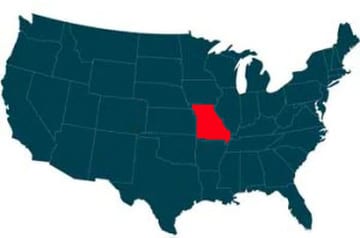 Missouri assigns blue warning lights differently from most states. Under RSMo 307.175.1, members of an organized fire department, ambulance association, or rescue squad, whether paid or volunteer, may use fixed, flashing, or rotating blue lights while responding to or working a fire or ambulance call, with a warning siren and only in a bona fide emergency. Police and other emergency vehicles may use red, or red and blue, when responding to an emergency under RSMo 307.175.2(1). Missouri also regulates the purchase itself: RSMo 304.022.6 requires a buyer to furnish the seller an affidavit stating that the emergency light will be used exclusively for emergency-vehicle purposes.
| Vehicle or industry type | Permitted or required colors | Core rule or limitation | Statute or authority |
|---|---|---|---|
| Police and law enforcement | Red, or red and blue | Emergency vehicles may use red or red-and-blue while responding. Front red or blue and siren use are limited by RSMo 304.022.5, with narrow police exceptions added in 2025. | RSMo 304.022.4-.5; RSMo 307.175.2(1)(a) |
| Fire | Blue; also red, or red and blue | Blue is tied to a bona fide fire/ambulance emergency, a warning siren, and written authorization. Red or red-and-blue is also allowed under the emergency-response provision. | RSMo 307.175.1-.3 |
| EMS and ambulance | Blue; also red, or red and blue | The same blue-light and siren framework applies to organized ambulance associations and rescue squads; ambulances also fall within the emergency-vehicle definition. | RSMo 307.175.1-.3; RSMo 304.022.4(2) |
| Volunteer responder and POV | Blue; also red, or red and blue | The statute expressly reaches paid or volunteer members. Blue-light use requires written authorization and bona fide emergency use. | RSMo 307.175.1, .3 |
| Tow and road service | Red, or red and blue for emergency response; amber treatment is overlapping | Wreckers and tow trucks are emergency vehicles. Red/red-blue is tied to emergency response. Amber is not listed for tow trucks in RSMo 307.175.2(2), but other lamp statutes also affect warning signals and color. | RSMo 304.022.4(4), .5; RSMo 307.175.2; RSMo 307.100; RSMo 307.095 |
| Construction and maintenance | Amber, or amber and white; limited red or red and blue | MoDOT vehicles may use amber/amber-white. MoDOT contractors have signed-work-zone conditions; contractor red/red-blue is limited to dusk-to-dawn stationary use and no more than two units per work zone. | RSMo 307.175.2(1)(c), .2(2)(a)-(b); RSMo 304.580 |
| Utility | Amber, or amber and white; red or red and blue during qualifying emergency service | Amber/amber-white requires stationary operation in a signed work zone with a utility worker present. Utility vehicles also enter the emergency-vehicle definition while performing emergency service. | RSMo 307.175.2(2)(c); RSMo 304.022.4(4) |
| Pilot and escort | No general beacon color for every escort; specific night/emergency lighting applies | Baseline escort equipment includes the required sign and fluorescent flags. Separate MoDOT permit rules require amber or clearance lighting for specified movements. | 7 CSR 10-25.020 |
| Private security | No special statewide emergency-light authorization located | Private security is not included in the listed emergency-vehicle categories. General lamp-color, flashing-signal, and auxiliary-lamp rules still apply. | RSMo 304.022.4; RSMo 307.095; RSMo 307.100 |
| Coroner / medical examiner | Red, or red and blue | Authorized when responding to a crime scene, motor-vehicle accident, workplace accident, or a location where law enforcement requested those services. | RSMo 307.175.2(1)(d) |
Is it illegal for civilians to have red or blue lights in Missouri?
Yes. Missouri law bars a person from driving or moving a vehicle on a street or highway with a red light visible directly from the front unless the vehicle falls within a statutory exception, including an emergency vehicle. RSMo 307.095.1 makes that forward-facing red restriction explicit, and subsection 2 classifies a violation as an infraction.
Blue is more restricted. RSMo 307.175.3 states that no person may use or display a siren or blue lights on the covered motor vehicle or emergency equipment without a valid written permit. The permit language is tied to organized fire departments, ambulance associations, rescue squads, and the State Highways and Transportation Commission. A private civilian who does not fit an authorized role should not treat possession of a blue warning light as permission to display or use it on public roads.
Missouri also limits ordinary front auxiliary lighting. RSMo 307.080.1 allows no more than three front auxiliary lamps, mounted 12 to 42 inches above the level surface on which the vehicle stands. RSMo 307.105.1 generally limits the number of front lamps over 300 candlepower that may be lighted at one time to four when the vehicle is on a highway.
Do you need an affidavit to buy an emergency light in Missouri?
Yes. Missouri RSMo 304.022.6 says a person may not purchase an emergency light described in that section without furnishing the seller an affidavit stating that the light will be used exclusively for emergency-vehicle purposes.
The statute does not prescribe a statewide form or filing portal. The buyer's statement goes to the seller. This makes Missouri unusual because the compliance issue begins at the transaction, not only after installation or road use. Fleet purchasers should plan for the affidavit as part of procurement documentation.
RSMo 304.022.7 classifies a violation of section 304.022 as a class A misdemeanor. Because subsection 6 sits inside that section, the purchase-affidavit requirement should be treated as a substantive legal condition rather than optional paperwork.
Police, fire, EMS, and volunteer responders
Missouri authorizes different color paths for law enforcement and for fire/EMS responders. RSMo 304.022.4 includes Missouri State Highway Patrol vehicles, Capitol Police, conservation agents, park rangers, police and fire departments, sheriffs, federal law-enforcement officers, coroners, medical examiners, ambulances, and several other response vehicles within the emergency-vehicle definition. RSMo 307.175.2(1)(a) then allows emergency vehicles to use fixed, flashing, or rotating red or red-and-blue lights when responding to an emergency.
Fire, ambulance, and rescue members have an additional blue-light rule. RSMo 307.175.1 expressly applies to any member of an organized fire department, ambulance association, or rescue squad, whether paid or volunteer. While responding to a fire or ambulance call or working the scene, the member may use a warning siren with fixed, flashing, or rotating blue lights, but only for a bona fide emergency. This is the statute behind Missouri's unusual blue fire truck light practice.
RSMo 304.022.5(1) adds an operating limit: emergency vehicles generally may not sound the siren or display front red or blue except while responding to an emergency call, pursuing an actual or suspected law violator, or responding to, but not returning from, a fire. Since August 28, 2025, subsection 5(3) gives police vehicles narrow exceptions for specified speed-enforcement, crime-in-progress, and surveillance situations.
Tow trucks and road-service vehicles
 Missouri classifies wreckers and tow trucks as emergency vehicles in RSMo 304.022.4(4). That classification allows red or red-and-blue lights under RSMo 307.175.2(1)(a) when the vehicle is responding to an emergency, and RSMo 304.022.5(1) independently restricts front red or blue to the listed emergency-response situations.
Amber requires a more careful reading. RSMo 307.175.2(2) specifically authorizes fixed, flashing, or rotating amber or amber-and-white lights for MoDOT vehicles, MoDOT contractors, and qualifying utility work. It does not name tow trucks. At the same time, RSMo 307.100 permits alternating flashing warning signals on emergency vehicles as defined in RSMo 304.022, and RSMo 307.095 allows auxiliary lamps to show substantially white, yellow, or amber. Because these provisions overlap without a tow-specific amber-beacon sentence, Missouri tow fleets should verify the intended amber configuration with the Missouri State Highway Patrol before installation or use.
For equipment selection, ETD's original tow-light guidance remains relevant only after that authorization question is settled. Missouri law controls the use of any tow truck warning-light configuration, not product availability.
Construction, maintenance, and utility vehicles
Missouri gives MoDOT and qualifying work-zone vehicles a detailed amber and amber-white framework under RSMo 307.175.2(2). Vehicles owned or leased by the State Highways and Transportation Commission and operated by an authorized MoDOT employee may display fixed, flashing, or rotating amber or amber-and-white lights.
A MoDOT contractor or subcontractor may use amber or amber-and-white only when the vehicle or equipment is in a work zone defined by RSMo 304.580, highway workers are present, and the work zone is designated by signs. The same contractor may use red or red-and-blue under RSMo 307.175.2(1)(c), but only between dusk and dawn, while stationary, in the signed work zone with highway workers present, and on no more than two vehicles or pieces of equipment in that work zone. That two-unit cap matters when specifying construction vehicle lighting for a multi-unit jobsite.
Missouri utility workers may display amber or amber-and-white under RSMo 307.175.2(2)(c) only while stationary in a signed work zone with a utility worker present. RSMo 304.022.4(4) separately includes a utility or public-service vehicle while performing emergency service, which creates the emergency-response path for red or red-and-blue use.
Pilot, escort, and private-security vehicles
Missouri does not prescribe one universal rotating or flashing beacon for every pilot or escort vehicle. Under 7 CSR 10-25.020, the baseline escort rules require a qualifying vehicle, an 'OVERSIZE LOAD' or 'WIDE LOAD' sign, and fluorescent flags, with additional equipment for overheight movements. Separate provisions require amber lights at load extremities in lieu of flags for specified night movements and impose clearance-light rules for certain emergency or low-visibility movements.
Missouri provides no special statewide emergency-light authorization for private-security vehicles in RSMo 304.022 or RSMo 307.175. That does not convert silence into permission. Private-security vehicles remain subject to the general lamp statutes, including the forward-facing red restriction in RSMo 307.095, the flashing-signal limits in RSMo 307.100, and the auxiliary-lamp count and mounting rule in RSMo 307.080. The original ETD strobe lights link is preserved for product-format context, not as a statement of legal authorization.
Red and blue warning lights
Missouri reserves red and blue warning-light use to statutorily authorized vehicles and situations. RSMo 307.175.2(1) allows fixed, flashing, or rotating red or red-and-blue lights for emergency vehicles responding to an emergency; fire, ambulance, and rescue vehicles described in subsection 1; narrowly defined MoDOT contractor work; and coroners, medical examiners, or forensic investigators responding to specified scenes or law-enforcement requests.
Blue also interacts with the written-permit language in RSMo 307.175.3. Fire, ambulance, and rescue personnel should have the written authorization required by that subsection before using blue lights or a siren. For all vehicles, RSMo 304.022.5 restricts when front red or blue may be displayed, subject to the narrow police exceptions effective August 28, 2025.
Amber, yellow, and white warning lights
Missouri expressly authorizes fixed, flashing, or rotating amber or amber-and-white warning lights for the work-vehicle categories listed in RSMo 307.175.2(2): qualifying MoDOT vehicles, MoDOT contractors, and utility workers under the conditions stated in that section.
The general lamp rule in RSMo 307.095.1 separately says auxiliary lamps, cowl lamps, and spot lamps may show substantially white, yellow, or amber. That general color permission does not erase the special warning-light restrictions in RSMo 307.175 or the flashing-signal limits in RSMo 307.100. A vehicle that is not named in the amber-warning provisions should not assume that an amber auxiliary-lamp color rule alone authorizes a rotating or flashing warning beacon.
Green and purple warning lights
Missouri does not specifically authorize green or purple emergency warning lights in RSMo 304.022, RSMo 307.175, or the statewide MoDOT escort rule reviewed for this page. Neither color should be treated as authorized merely because it is not named in the principal emergency-light statute.
The safer statutory reading is category-specific: determine whether the vehicle is authorized to use a warning signal at all, then apply the lamp-color and flashing-signal rules that govern that equipment. For green or purple installations that would be used on public roads, obtain written guidance from the appropriate Missouri authority before purchase or activation.
Missouri's Move Over law
Missouri's Move Over rule is in RSMo 304.022.2. When approaching a stationary vehicle displaying lighted red or red-and-blue lights, or lighted amber or amber-and-white lights, a driver must proceed with caution and, on a roadway with at least four lanes and at least two lanes traveling the same direction, move into a lane that is not adjacent when the lane change can be made safely.
If a lane change is unsafe or impossible, the driver must proceed with due caution and reduce speed to a safe speed for road conditions. Subsection 1 separately covers an approaching emergency vehicle using a siren, a qualifying red lamp visible 500 feet to the front, or an authorized flashing blue light: other drivers must yield, move as far right as possible, stop, and remain stopped until the emergency vehicle passes unless directed otherwise by an officer.
The Move Over trigger does not itself authorize a new class of vehicle to display amber. The display must still be lawful under the warning-light and vehicle-equipment statutes that apply to that vehicle.
Penalties and fines
Missouri uses different penalty classifications for different lighting violations. RSMo 304.022.7 makes a violation of section 304.022 a class A misdemeanor, which includes the purchase-affidavit rule and the operating provisions inside that section. RSMo 307.175.3 also states that a violation of section 307.175 is a class A misdemeanor.
By contrast, RSMo 307.095.2 classifies a violation of the general lamp-color section as an infraction. RSMo 307.080.2, RSMo 307.100.2, and RSMo 307.105.2 also classify violations of those specific equipment sections as infractions. The charge therefore depends on the actual conduct and controlling section, not simply on the fact that a warning light was installed.
Permits and written authorization
Missouri requires written authorization for the blue-light and siren use covered by RSMo 307.175.3. The subsection says permits are issued and may be revoked by the chief of an organized fire department, organized ambulance association, rescue squad, or the State Highways and Transportation Commission.
For fire, ambulance, rescue, and volunteer responders, verbal permission is not enough. The permit must be in writing, remains revocable, and does not excuse the operator from other traffic laws. Missouri does not specify a statewide fee or universal application form in RSMo 307.175. The authorization path depends on the organization or commission identified by the statute.
Who can verify Missouri warning-light requirements?
Missouri drivers and fleet managers can verify statewide questions with the Missouri State Highway Patrol. The Patrol lists General Headquarters at 1510 East Elm Street, Jefferson City, Missouri 65101, with the general phone number 573-751-3313 on its official website.
For a configuration involving blue lights, a siren, a volunteer POV, tow-truck amber lighting, or another fact-specific setup, ask the Patrol or the issuing department for guidance tied to the exact vehicle and intended use. Agency guidance can help explain enforcement practice, but the controlling Missouri statutes and regulations remain the legal authority.
Frequently asked questions
What color lights can civilians have on a vehicle in Missouri?
Missouri civilians cannot lawfully use forward-facing red in ordinary public-road operation, and blue-light or siren use is restricted by RSMo 307.175. General auxiliary lamps may be substantially white, yellow, or amber under RSMo 307.095, but flashing-warning use is separately limited by RSMo 307.100.
Can volunteer firefighters use blue lights in Missouri?
Yes, Missouri law expressly includes paid or volunteer members of organized fire departments, ambulance associations, and rescue squads in RSMo 307.175.1. Blue-light and siren use is limited to bona fide emergencies and requires written authorization under subsection 3.
Can Missouri tow trucks use amber warning lights?
Missouri does not name tow trucks in the amber/amber-white list in RSMo 307.175.2(2), but tow trucks are emergency vehicles under RSMo 304.022.4(4) and other lamp provisions also apply. Because the statutes overlap, verify the exact amber configuration with the Missouri State Highway Patrol before use.
What lights does Missouri require on an escort or pilot vehicle?
Missouri's baseline escort rule requires signs and fluorescent flags, not one universal beacon. 7 CSR 10-25.020 adds amber or clearance-light requirements for specified night, low-visibility, and emergency movements.
What is the penalty for illegal emergency lights in Missouri?
It depends on the violated section. RSMo 304.022 and RSMo 307.175 carry class A misdemeanor penalties, while violations of several general equipment sections, including RSMo 307.095, are infractions.
Do I have to sign anything to buy an emergency light in Missouri?
Yes. RSMo 304.022.6 requires the purchaser to furnish the seller an affidavit stating that the emergency light will be used exclusively for emergency-vehicle purposes.
Neighboring states
Missouri borders eight states, and warning-light rules can change immediately at the state line. Compare the Missouri rules with Iowa, Illinois, Kentucky, Tennessee, Arkansas, Oklahoma, Kansas, and Nebraska before operating a multi-state fleet or response vehicle across state lines.
Equipment for Missouri fleets
Missouri fleets can use ETD product categories to compare form factors after the legal color and operating authority are confirmed. Relevant original links on the live Missouri page include emergency vehicle lights, police lights, fire truck lights, construction vehicle lighting, and strobe lights.
Product availability does not establish that a color, flash pattern, or lighting configuration is legal for a particular Missouri vehicle or use. Confirm the applicable statute, permit, and agency guidance before purchasing, installing, or activating warning equipment.
Author: Chris Dallmann, Founder, Extreme Tactical Dynamics. Chris Dallmann has supplied emergency and warning lighting to law enforcement, fire, EMS, towing, construction, and utility customers since founding Extreme Tactical Dynamics in 2005 and leads ETD’s state-statute research program.
Reviewed by: ETD Regulatory Compliance Team
Last updated: August 25, 2026
Last reviewed: August 25, 2026
Disclaimer: This guide is provided by Extreme Tactical Dynamics as general information and is not legal advice. Local ordinances, agency rules, employer policies, permit conditions, and rules for private property may impose additional requirements. Statutes and regulations can change. Confirm the current requirements with the controlling Missouri authority or qualified legal counsel before purchasing, installing, or using warning equipment.