


New York Emergency Vehicle Light State Statutes
New York regulates added warning lights through Vehicle and Traffic Law § 375(41). For New York-registered vehicles, red warning lights are tied to authorized emergency vehicles; volunteer firefighters may use one authorized blue light; volunteer ambulance and mobile crisis team members may use one authorized green light; and hazard vehicles generally use amber. Blue also has narrow rear-facing authorizations for police, fire, ambulance, county EMS and qualifying tow vehicles.
| Vehicle or Industry Type | Permitted or Required Colors | Core Rule or Limitation | Statute or Authority |
|---|---|---|---|
| Police and law enforcement | Red or red/white; one moving white; blue permitted with red/red-white | Blue under §375(41)(2), (4)(b) is rear projection only under current law. A159 would change police forward-blue rules but is not law. | VTL §375(41)(2), (4)(b) |
| Fire departments | Red or red/white; one moving white; blue with red/red-white | Red/red-white and the authorized moving white may remain displayed while returning from an alarm; blue remains tied to emergency operation. | VTL §375(41)(2), (4)(b) |
| Ambulance and county EMS | Red or red/white; one moving white; blue with red/red-white | Blue is authorized for rear projection during emergency operation; ambulances are not a red-and-white-only class. | VTL §375(41)(2), (4)(b) |
| Volunteer firefighter private vehicle | One blue light | Written fire-chief authorization, revocable; display only during emergency operation. | VTL §375(41)(4)(a) |
| Volunteer ambulance or mobile crisis member vehicle | One green light | Written chief-officer or team-director authorization; display limited by §375(41)(5)(a). | VTL §375(41)(5)(a) |
| Tow and roadside recovery | Amber; optional blue rear projection | Hazard-vehicle amber applies during hazardous operation; tow blue may show only while the required amber is displayed. | VTL §375(41)(3)(a), (4)(b-1) |
| Construction and highway maintenance | Amber when the vehicle qualifies as a hazard vehicle or during the temporary roadside-work exception | General construction status alone is not a color authorization; the activity and statutory definition control. | VTL §117-a, §375(41)(3)(a) |
| Utility vehicles | Amber when working the utility’s own facilities as a hazard vehicle | Amber visible to approaching traffic from 500 feet during a hazardous operation, subject to statutory substitutions. | VTL §117-a, §375(41)(3)(a) |
| Pilot and escort vehicles | Amber | Special-hauling permit and escort-certificate rules apply; escort lighting is governed separately from emergency-vehicle privileges. | VTL §114-c; VTL Article 21-C (§§546-551); NY DMV escort rules |
| Private security | No general statewide special warning-light authorization located | A narrow NYC rule allows one amber light for an authorized volunteer civilian or crime-patrol member; that is not a general commercial-security rule. | VTL §375(41)(3)(b) |
| Public snow and ice removal | Amber; green or green-and-amber on qualifying publicly owned plows | Green is limited to state or specified municipal snow-removal hazard vehicles and may be displayed only while amber is displayed. | VTL §375(41)(3)(a), (5)(c) |
| Ordinary private passenger vehicle | Required lighting; temporary amber in narrow circumstances | No general right to add red, blue, green or moving white warning lights. Temporary amber is allowed for a disabled vehicle or qualifying highway work stop. | VTL §375(41)(1), (3)(a) |
Police, fire, ambulance, and EMS warning lights in New York
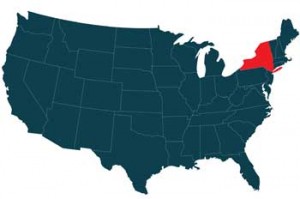 New York authorized emergency vehicles may display red or combination red-and-white warning lights, plus one moving white light, during an emergency operation under VTL § 375(41)(2). The vehicle classes come from VTL § 101, which includes police, fire, ambulance, emergency ambulance service, county EMS, blood-delivery, human-organ delivery and other specifically defined vehicles. VTL § 114-b defines emergency operation and generally excludes returning from the service.
Blue is not categorically prohibited on New York police, fire or EMS fleets. Section 375(41)(4)(b) permits one or more blue lights, or blue combined with red or red-and-white, on police, fire, ambulance, emergency ambulance service and county EMS vehicles. Under current law the blue light is for rear projection and must accompany authorized red or red-and-white lighting. Fire vehicles have a separate return-from-alarm rule for red, red-and-white and the authorized moving white light. Fleet buyers comparing emergency vehicle lights, police lights, fire truck lights, LED light bars or full-size light bars still need to match projection direction and operating status to the statute before installation.
Volunteer responders and personal vehicles
New York gives qualifying volunteer responders limited personal-vehicle lighting authority. Under § 375(41)(4)(a), a volunteer firefighter may have one blue light on the firefighter’s vehicle, a household family member’s vehicle, or a vehicle owned by a business in which the firefighter has a proprietary interest or is employed. Written authorization from the fire chief is required, may be revoked, and the blue light may be displayed only while the firefighter is engaged in an emergency operation.
Under § 375(41)(5)(a), a member of a volunteer ambulance service or mobile crisis team may have one green light on the same kinds of qualifying vehicles. The volunteer ambulance service’s chief officer or the mobile crisis team’s director must authorize it in writing. Ambulance members may display the green light during an emergency operation; mobile crisis members are limited to emergency operation while deployed by their team. Section 375(26) reserves sirens to authorized emergency vehicles, so the blue- or green-light authorization by itself does not authorize a siren. ETD’s blue warning lights and green warning lights are equipment categories only; statutory authorization still controls. DMV also regulates colored-light equipment under Part 44.
Current DMV Part 44 status and equipment rules
New York authorizes DMV to regulate colored-light equipment under VTL § 375(41)(6). The statute controls who may use restricted blue or green lights and when, while DMV regulations may impose additional equipment, mounting, display, or documentation requirements.
Volunteer firefighters, volunteer ambulance members, and mobile crisis team members should obtain the written authorization required by § 375(41)(4)(a) or § 375(41)(5)(a) and confirm the current Part 44 equipment requirements with DMV before installing or operating a blue or green warning light.
Tow trucks, construction, highway, and utility vehicles
New York uses amber as the principal warning color for hazard vehicles. VTL § 117-a includes vehicles specially equipped to tow or push disabled vehicles, highway-maintenance and public-highway snow-removal vehicles, and utility vehicles working on the utility’s own facilities. Section 375(41)(3)(a) requires qualifying hazard vehicles in hazardous operations to display amber visible to approaching traffic from 500 feet, subject to daylight flag and barricaded-work-area substitutions.
Tow operators have an additional blue option: § 375(41)(4)(b-1) permits blue rear projection on a hazard vehicle designed for towing or pushing a disabled vehicle, but only while the required amber is displayed. General construction equipment is not automatically a hazard vehicle merely because it belongs to a contractor; the activity must fit the statutory definition or the temporary amber provision for a vehicle stopped on a highway doing work that restricts or impedes traffic. ETD’s tow truck lights, construction vehicle lights, utility vehicle warning lights, flashing amber lights and mini light bars are equipment categories, not legal authorizations.
Green, white, amber, yellow, and purple lights
New York green-light law has two distinct uses. The private-vehicle rule in § 375(41)(5)(a) allows one green light for authorized volunteer ambulance and mobile crisis team members. Separately, § 375(41)(5)(c) permits green or green-and-amber on an ice-and-snow-removal hazard vehicle owned and operated by the state or a county, city, town or village, but the green may be displayed only while amber is also displayed. A privately contracted plow does not become eligible for green under that public-ownership provision.
White requires a different analysis. Subdivision 41 governs added lights other than those required by law. It generally leaves additional steady white outside the color prohibition, subject to other equipment limits, while revolving, rotating, flashing, oscillating or constantly moving white is prohibited unless expressly authorized. Authorized emergency vehicles may use one such moving white light with their authorized red or red-and-white warning lights. New York’s statute says amber, not yellow, for the hazard-vehicle warning authorization. Purple receives no New York-registered warning-light authorization in § 375(41), so silence is not permission under paragraph 1. Qualifying out-of-state vehicles have separate exceptions discussed below.
Can an ordinary civilian use flashing lights in New York?
 An ordinary New York-registered private vehicle has no general authority to add red, blue, green, purple or moving white warning lights. The important exceptions are specific rather than general: an authorized volunteer firefighter may use one blue light, an authorized volunteer ambulance or mobile crisis team member may use one green light, and § 375(41)(3)(a) permits temporary amber on a disabled vehicle or a vehicle stopped on a highway while doing work that restricts, impedes or interferes with normal traffic flow.
That means a product category is never the legal test. A private buyer looking at strobe lights must first identify a statutory authorization for the vehicle, color and use. Section 375(41)(1) also applies to affixing unauthorized lights, not merely turning them on. The statute’s highway-equipment scope does not justify assuming that private-property or exclusively off-road use makes an otherwise unauthorized road installation lawful.
Pilot cars and escort vehicles
New York treats pilot and escort vehicles under special-hauling rules rather than as ordinary emergency vehicles. VTL § 114-c defines an escort vehicle as a motor vehicle preceding or following a vehicle or combination operating under a special hauling permit. Article 21-C requires an escort certificate; § 546 requires the applicant to be at least 21, hold a valid driver’s license and pass the commissioner’s test.
The current New York DMV oversized-vehicle guidance says an escort is required when the escorted vehicle is at least 12 feet wide, 80 feet long, 14 feet high, or has more than 10 feet of overhang. Escort vehicles use warning signs and amber lighting under the permit rules. Operating without a valid certificate carries its own penalty under VTL § 551: $200 to $500 for operating without the required valid license and escort certificate, with separate penalties for a cancelled certificate or violating escort-equipment rules.
Private security and civilian patrol vehicles
New York does not provide a general statewide special warning-light authorization merely because a New York-registered vehicle performs commercial private-security work. A security vehicle must qualify under some other statutory category before using a restricted warning color. The closest express rule is much narrower: in a city of one million or more, § 375(41)(3)(b) allows one amber light on a vehicle owned or operated by a volunteer member of a civilian or crime patrol with written, revocable authorization from the local police commissioner and only during an authorized patrol operation.
That provision should not be generalized to shopping-mall guards, apartment-complex security, private patrol businesses, or other commercial security fleets. If a security vehicle also performs a separately defined hazard operation, that separate status must be analyzed on its own facts rather than inferred from the security label.
New York's Move Over law
VTL § 1144-a requires drivers to exercise due care when approaching stopped or standing authorized emergency vehicles, hazard vehicles and vehicles displaying qualifying blue or green lights, including moving from the adjacent lane when safe and lawful. Subdivision (d), added by the 2023 expansion, also reaches any motor vehicle parked, stopped or standing on the shoulder or any portion of a parkway or controlled-access highway.
Section 1144-a supplies no separate penalty, so the general traffic-infraction ladder in VTL § 1800(b)(1) applies: a first conviction can bring up to a $150 fine, up to 15 days in jail, or both; a second violation within 18 months can reach $300 and 45 days; and a third or subsequent qualifying violation within 18 months can reach $450 and 90 days. Pending S8715/A8978 would add a five-point consequence, but it is not current law.
Penalties for illegal warning lights and impersonation
New York’s equipment statute has its own penalty. VTL § 375(32)(a) provides that violations of § 375 other than the specified brake provisions are punishable by a fine up to $150, imprisonment up to 30 days, or both, unless the section provides otherwise. That is the relevant statutory penalty for an unlawful added light under subdivision 41; it should not be confused with the separate Move Over penalty ladder.
Using lighting as part of pretending to hold official authority can create separate criminal exposure. Penal Law § 190.25 covers criminal impersonation in the second degree, including pretending to be a public servant with intent to induce another person to submit to or act in reliance on that pretended authority. Penal Law § 190.26 addresses first-degree criminal impersonation in specified circumstances. Lighting alone does not establish either offense; the statutory elements must be met.
Out-of-state vehicles and neighboring states
New York provides two limited out-of-jurisdiction exceptions. Section 375(41)(7) excludes qualifying vehicles from another state or Canada that enter New York to render police, fire, civil-defense or ambulance aid when their lights comply with home-jurisdiction law and are displayed as permitted there. Section 375(41)(8) separately excludes vehicles registered in another state or foreign jurisdiction that carry home-jurisdiction-compliant colored lights that are not revolving, rotating, flashing, oscillating or constantly moving.
Those exceptions make the home state’s law important at the border. Operators crossing into New York should review the applicable ETD statute page for Connecticut, Massachusetts, New Jersey, Pennsylvania, or Vermont before relying on equipment authorized elsewhere. Those are all five states that directly border New York.
Pending New York legislation and State Police contact
Several active 2025-2026 bills could change this subject, but none listed here is current law as of August 19, 2026. S214 would permit more than one blue or green volunteer light; S10476/A9327 would add green-light authority for additional crisis responders; A159 would permit forward-facing blue on police vehicles; S3333/A8688 would require motorists to yield to approaching authorized blue- or green-light vehicles; S311 would increase consequences for certain Move Over violations; S8715/A8978 would make a Move Over violation a five-point violation; and S10237/A11075 would add New York City medical-examiner vehicles to emergency-vehicle and lighting provisions. Each remains pending in the current official bill record.
The correct statewide agency name is the New York State Police. Its current contact page directs emergencies to 911 and non-emergency callers to their local Troop, with Troop headquarters numbers listed by region. It does not publish one statewide non-emergency telephone number.
Frequently asked questions
Can volunteer firefighters use blue lights in New York?
Yes. A qualifying volunteer firefighter may use one blue light with written, revocable authorization from the firefighter’s chief, and may display it only while engaged in an emergency operation under VTL § 375(41)(4)(a). The authorization does not by itself authorize a siren.
Can volunteer ambulance or mobile crisis members use green lights?
Yes. VTL § 375(41)(5)(a) permits one green light with written authorization from the volunteer ambulance service’s chief officer or the mobile crisis team’s director, subject to the operating limits stated in the statute.
Are blue lights legal on tow trucks in New York?
Yes, with conditions. A hazard vehicle designed for towing or pushing a disabled vehicle may display blue to the rear under § 375(41)(4)(b-1), but only while the amber light required by § 375(41)(3)(a) is displayed.
Are white strobe lights legal on an ordinary private car?
No general authorization exists for a moving white warning light on an ordinary New York-registered private car. Section 375(41)(1) prohibits revolving, rotating, flashing, oscillating or constantly moving white unless the subdivision expressly allows it.
What is the penalty for an illegal emergency light in New York?
A violation of the relevant § 375 equipment rule may be punished by a fine up to $150, up to 30 days in jail, or both under § 375(32)(a), unless another provision of the section supplies a different penalty.
Do blue or green volunteer lights give the driver emergency-vehicle privileges?
No. The limited blue- or green-light authorization does not itself convert a private vehicle into an authorized emergency vehicle under VTL § 101. Any separate emergency-driving privilege must come from the law governing an authorized emergency vehicle, not from the courtesy light alone.
About this New York legal guide
Author: Chris Dallmann, Founder, Extreme Tactical Dynamics. Chris Dallmann has supplied emergency and warning lighting to law enforcement, fire, EMS, towing, construction and utility fleets since founding ETD in 2005 and oversees the company’s state-statute research program. About Extreme Tactical Dynamics.
Reviewed by: ETD Regulatory Compliance Team
Last reviewed: August 19, 2026
Last updated: August 19, 2026
Disclaimer: This guide is provided by Extreme Tactical Dynamics for general information and is not legal advice. Vehicle classification, local rules, agency policy, permit conditions and specific operating facts can change which provision applies. Confirm current authority with your department, authorizing chief or director, New York DMV, New York State DOT, New York State Police, local authority or qualified counsel before equipping or operating a vehicle.