


Texas Emergency Vehicle Light State Statutes
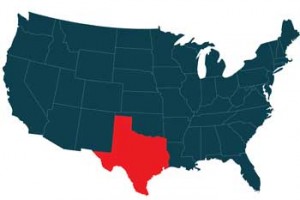
Texas does not assign one warning-light color to everyone. Under Transportation Code § 547.305(c), operating a motor vehicle equipped with a red, white, or blue beacon, flashing light, or alternating light is generally prohibited unless Chapter 547 specifically authorizes that equipment or it is an ordinary lamp used as allowed by law. Texas also generally bars forward-facing red on vehicles other than police vehicles unless another law expressly authorizes it. The controlling rule therefore depends on the vehicle class, the light color, and the operating condition.
| Vehicle or industry type | Permitted or required colors | Core rule or limitation | Statute or authority |
|---|---|---|---|
| Police and law enforcement | Red, white, blue | Police vehicles are exempt from the general forward-facing red restriction and may, but are not required to, use the four-red-lamp configuration in § 547.702(c). | § 547.305(b)-(c); § 547.702(f) |
| Fire | Red required; white optional | Qualifying authorized emergency vehicles use four alternately flashing red lamps, two front and two rear; white may be added under § 547.702(c-1). | § 547.702(c)-(c-1) |
| EMS and ambulance | Red required; white optional | Licensed ambulances and qualifying EMS vehicles within § 541.201(1) follow the authorized-emergency-vehicle signal-lamp rule unless a statutory exception applies. | § 541.201(1); § 547.702(c)-(c-1) |
| Volunteer responder / POV | Red; white only if configuration is otherwise authorized | A volunteer firefighter responding in a private vehicle may use § 547.702(c) lamps or a temporary roof-mounted red flashing lamp. Certified EMS personnel receive emergency-vehicle status while responding, but §§ 547.702(d)-(e) are written specifically for volunteer firefighters. | § 541.201(1)(G); § 547.702(d)-(e) |
| Tow and road service | Alternately flashing warning lamps when statutory conditions are met | Tow trucks receive conditional authority while under law-enforcement direction at a collision, while hooking up a disabled roadway vehicle, or under the separate mounted-light-bar provision. | § 547.305(d)(4)-(5) |
| Construction and maintenance | As required by TxDOT standards | Highway maintenance and construction vehicles must be equipped with and display the lamps required by TxDOT standards and specifications. | § 547.305(e); § 547.105 |
| Utility | As required by TxDOT standards | Qualifying service vehicles, including public utility vehicles, are governed by the TxDOT lamp standards referenced in Chapter 547. | § 547.001; § 547.305(e) |
| Pilot / escort | Amber; blue and amber permitted | Escort flag vehicles may use alternating or flashing blue and amber. TxDMV also permits two flashing amber lamps or one rotating amber beacon at least eight inches in diameter. | § 547.305(e-3); TxDMV escort requirements |
| Private security | Green, amber, white only | A security patrol vehicle may only be equipped with green, amber, or white lights; temporary or inactive mounted lights still count as equipment. | § 547.305(e-1)-(e-2); Occ. Code § 1702.108 |
| Private passenger vehicle | Ordinary lamps and hazard lamps | Hazard lamps may show white or amber to the front and red or amber to the rear. This does not create a general emergency-light authorization. | § 547.331; § 547.305(c) |
| Medical examiner / justice of the peace | § 547.702(c) lamps or temporary red and blue roof lamp | Specified medical examiner and justice-of-the-peace vehicles have separate statutory authority tied to qualifying official duties. | § 547.751; § 547.752 |
Who qualifies as an authorized emergency vehicle in Texas?
Texas defines the authorized-emergency-vehicle class in Transportation Code § 541.201(1). The definition includes fire department and police vehicles, licensed ambulances, certain EMS vehicles, designated municipal and county emergency-management vehicles, vehicles designated under § 546.0065, qualifying private vehicles of volunteer firefighters and certified EMS personnel while responding, industrial emergency-response vehicles, accredited blood or tissue bank emergency-delivery vehicles, federal law-enforcement vehicles, and a narrow county emergency-management private-vehicle class.
The response condition matters for personal vehicles. A private vehicle does not receive permanent emergency-vehicle status merely because its owner is a volunteer firefighter or certified EMS responder. Section 541.201(1)(G) ties that status to responding to a fire alarm or medical emergency.
Emergency response lights: police, fire, EMS, and ambulance
Texas requires qualifying authorized emergency vehicles to carry four alternately flashing red signal lamps under § 547.702(c): two to the front and two to the rear, mounted as high and as widely spaced laterally as practicable and visible at 500 feet in normal sunlight. Section 547.702(c-1), effective September 1, 2023, allows alternating or flashing white signal lamps that meet the same mounting and visibility requirements. The white option supplements the statutory red-light system rather than erasing the red requirement for vehicles subject to subsection (c).
Police vehicles have more configuration flexibility. § 547.702(f) says a police vehicle may, but is not required to, use the subsection (c) signal lamps. Section 547.305(b) also excludes police vehicles from the general rule against red light visible directly from the front.
For audible warning, § 547.702(a) permits an authorized emergency vehicle to have an approved siren, exhaust whistle, or bell audible at least 500 feet, and subsection (b) requires its use when necessary to warn of the vehicle's approach.
Can volunteer firefighters use red lights in Texas?
Yes. Texas expressly permits a volunteer firefighter responding to a fire alarm or medical emergency in a private vehicle to use red warning equipment under § 547.702(d)-(e). The vehicle may use signal lamps complying with subsection (c), or it may use a temporarily mounted roof lamp that flashes red and is visible at least 500 feet in normal sunlight. The statute makes the equipment optional rather than mandatory.
Certified EMS employees and volunteers are different. Section 541.201(1)(G) places their private vehicles inside the authorized-emergency-vehicle definition while they are responding, but the special private-vehicle equipment language in §§ 547.702(d) and (e) expressly refers to a vehicle operated by a volunteer firefighter. A certified EMS responder should not assume the volunteer-firefighter roof-lamp option applies merely because both classes appear in § 541.201(1)(G).
Tow trucks and roadside recovery lights
Texas gives tow trucks conditional warning-light authority under § 547.305(d)(4)-(5). A tow truck may use the alternately flashing lighting described in §§ 547.701 or 547.702 while it is under the direction of a law-enforcement officer at a collision scene or while it is hooking up to a disabled vehicle on a roadway. A separate provision covers a tow truck equipped with a mounted light bar containing turn-signal and stop lamps in addition to the lamps otherwise required by Chapter 547.
The definition of tow truck is context-specific. Section 547.305(f)(3) uses a broad lighting-rule definition covering a motor vehicle or mechanical device adapted or used to tow, winch, or move a disabled vehicle. The Move Over law uses a narrower definition tied to permitting and licensing under Occupations Code Chapter 2308. Fleet operators should match the definition to the statute they are applying.
Construction, maintenance, and utility vehicle lights

Texas does not put a single statewide work-vehicle color formula in § 547.305. Instead, § 547.305(e) requires highway maintenance vehicles, construction vehicles, and service vehicles to be equipped with and display the lamps required by standards and specifications adopted by the Texas Department of Transportation. § 547.105 directs TxDOT to adopt those standards, correlated to nationally recognized specifications.
The service-vehicle definition in § 547.001 includes vehicles used for a public-service function, including public utility vehicles, and vehicles TxDOT designates as service or escort flag vehicles. That structure is why a Texas utility fleet should verify the current TxDOT specification for its vehicle and job rather than relying on a generic claim that one color is always required.
Escort flag and private-security vehicle lights
Texas gives escort flag vehicles an unusual civilian authorization: § 547.305(e-3) permits alternating or flashing blue and amber lights. Current TxDMV Escort and Equipment Requirements state that an escort flag vehicle must have either two flashing amber lights, one rotating amber beacon at least eight inches in diameter, or alternating/flashing blue and amber lights fixed to the roof. The lights must be visible from all sides.
Private security is narrower. Section 547.305(e-1) says a security patrol vehicle may only be equipped with green, amber, or white lights. Subsection (e-2) makes the equipment rule apply whether the lamp is attached temporarily or permanently and whether it is activated. The security-patrol definition points to qualifying guard companies and security officers under Occupations Code Chapter 1702.
Are blue lights illegal in Texas?
Blue lights are not universally illegal in Texas, but they are restricted to statutory classes. Section 547.305(c) generally prohibits a red, white, or blue beacon, flashing light, or alternating light on a motor vehicle unless Chapter 547 specifically authorizes it. Police vehicles operate within the law-enforcement framework; escort flag vehicles receive express blue-and-amber authority in § 547.305(e-3); and § 547.305(e-4) permits vehicles described by the Move Over statute to be equipped with flashing blue lights.
That equipment permission should not be read as a blanket civilian right to display blue. A private motorist must have a specific statutory basis for the equipment and use. Security patrol vehicles are a clear example of the opposite rule because § 547.305(e-1) limits them to green, amber, or white.
Red, amber, yellow, white, green, and purple warning lights
Red
Texas generally bars red light visible directly from the front on non-police vehicles unless another law expressly authorizes it. Section 547.702(c) is one such authorization for qualifying emergency vehicles. Volunteer firefighters and the medical-examiner and justice-of-the-peace classes have separate red-light provisions.
Amber and yellow
Texas does not place amber in the general red-white-blue prohibition in § 547.305(c). Amber is expressly used in the escort and private-security rules, and private hazard lamps may display amber. “Yellow” is not a substitute authorization where a vehicle-specific statute or TxDOT standard controls; the applicable equipment rule still governs.
White
Flashing white is restricted by § 547.305(c) unless specifically authorized. Authorized emergency vehicles may add qualifying white signal lamps under § 547.702(c-1), security patrol vehicles may use white under § 547.305(e-1), and hazard lamps may display white to the front under § 547.331.
Green and purple
Green is expressly allowed for security patrol vehicles under § 547.305(e-1), but that narrow authorization does not make green a general warning-light color for other vehicle classes. No express statewide authorization for purple warning lights was located in the reviewed Chapter 547 provisions. Silence is not permission: a vehicle can still be restricted by broader equipment, impersonation, or vehicle-specific rules.
Can civilians use flashing or emergency lights in Texas?
An ordinary Texas motorist may use lawful hazard lamps, but Chapter 547 does not create a general civilian emergency-light privilege. § 547.331 permits a hazard-warning configuration with front lamps showing white or amber, or a color between white and amber, and rear lamps showing red or amber, or a color between red and amber. The lamps must be at the same level, spaced as widely as practicable, visible at least 500 feet in normal sunlight, and flash simultaneously.
That hazard-lamp rule does not authorize a private emergency beacon or light bar. Section 547.305(c) separately restricts red, white, and blue beacons and flashing or alternating lights unless Chapter 547 provides specific authority. For security patrol vehicles, subsection (e-2) also confirms that merely attaching a restricted lamp can matter even when the lamp is switched off.
Texas Move Over law
Texas requires drivers approaching specified stationary roadside vehicles to move over or slow down under Transportation Code § 545.157. The covered classes include authorized emergency vehicles using qualifying visual signals, tow trucks using authorized equipment, TxDOT and contract maintenance or construction vehicles, utility service vehicles, solid-waste and recycling vehicles, toll-project vehicles, animal-control vehicles removing an animal or carcass, and local-authority parking-citation vehicles.
Where the road has two or more lanes traveling in the same direction, the driver must vacate the lane closest to the protected vehicle. Otherwise, the driver must slow to no more than 20 mph below the posted speed limit when the limit is 25 mph or more, or to 5 mph when the posted limit is below 25 mph. Senate Bill 305 amended § 545.157 effective September 1, 2025.
Penalties for illegal warning lights and Move Over violations
Texas equipment violations under Chapter 547 can be misdemeanors. § 547.004 makes it an offense to operate, move, or knowingly permit another person to operate or move a vehicle that violates applicable Chapter 547 equipment rules. When no other penalty is provided, § 542.401 sets the general misdemeanor fine at $1 to $200. Section 542.403 adds a $3 state traffic fine, and § 542.4031 adds a separate $50 state traffic fine upon a guilty or nolo contendere plea or conviction under the subtitle.
Move Over penalties are much higher. Section 545.157(c) sets a $500 to $1,250 fine for the base misdemeanor and $1,000 to $2,000 for a second or subsequent offense within five years of the most recent preceding offense. A violation resulting in bodily injury is a Class A misdemeanor; a qualifying repeat bodily-injury offense is a state jail felony. A court may also suspend a driver's license for up to six months in circumstances specified by subsection (d-1).
Permits, authorization, and Texas agency contacts
Texas uses vehicle classification and statutory authorization rather than one general warning-light permit. Emergency-vehicle status can arise directly under § 541.201(1) or through a designation mechanism identified there. Private-security authority depends on the security-patrol definition tied to Occupations Code Chapter 1702. Escort operations are tied to TxDMV oversize/overweight permits and escort requirements.
The statewide public-safety agency is the Texas Department of Public Safety. DPS lists Austin Headquarters at 512-424-2000, and directs callers who do not know which office they need to that number. TxDOT controls the work-vehicle lamp standards referenced by §§ 547.105 and 547.305(e), while TxDMV publishes oversize/overweight escort and equipment requirements.
What changed recently in Texas warning-light law?
Texas has three recent changes worth separating by effective date. House Bill 3125 added the optional white signal-lamp provision in § 547.702(c-1), effective September 1, 2023. Senate Bill 305 amended the Move Over statute effective September 1, 2025. In addition, House Bill 1610 enacted amendments to §§ 547.751 and 547.752 that take effect April 1, 2027. Those 2027 amendments update cross-references connected to the Code of Criminal Procedure reorganization; they are not current law in August 2026.
For a 2026 compliance decision, the current versions of §§ 547.751 and 547.752 remain controlling until the future effective date. This distinction matters because the official code displays both current and future-effective text, and a future version should not be presented as if it already governs vehicle lighting.
Product and category reference: ETD carries light bars, police lights, lighting used on fire trucks, and flashing amber lights. Customers may also purchase emergency vehicle lights by vehicle type. Product availability does not establish that a color or lighting configuration is legal for a particular vehicle or use; Texas authorization and operating conditions still control.
Frequently asked questions
Can I put red and blue lights on my personal vehicle in Texas?
Not without a specific statutory authorization. Section 547.305(c) generally prohibits red, white, or blue beacons and flashing or alternating lights unless Chapter 547 specifically authorizes the equipment. Some responder, escort, and official vehicle classes have narrow exceptions.
What color lights can private security use in Texas?
Green, amber, or white only. Section 547.305(e-1) limits a security patrol vehicle to those colors, and subsection (e-2) says temporary or inactive attached lamps still count as equipment.
What lights can an escort vehicle use in Texas?
Texas escort flag vehicles may use amber or an authorized blue-and-amber configuration. TxDMV requires two flashing amber lights, one rotating amber beacon at least eight inches in diameter, or alternating/flashing blue and amber roof lights visible from all sides.
When can a tow truck use flashing lights in Texas?
Section 547.305(d)(4) authorizes specified alternating flashing equipment while the tow truck is under law-enforcement direction at a collision scene or hooking up a disabled vehicle on a roadway. Section 547.305(d)(5) separately covers a compliant mounted light bar with additional turn and stop lamps.
Is a warning light illegal if it is mounted but turned off?
For a Texas security patrol vehicle, it can still violate the equipment restriction. Section 547.305(e-2) says a vehicle is equipped with a lamp whether the lamp is attached temporarily or permanently and whether it is activated.
Do Texas emergency vehicles have to use red lights?
Qualifying authorized emergency vehicles subject to § 547.702(c) use four alternately flashing red lamps. White lamps may be added under § 547.702(c-1), while police vehicles have separate flexibility under subsection (f).
Author: Chris Dallmann, Founder and Executive Owner, Extreme Tactical Dynamics.
Chris founded Extreme Tactical Dynamics in 2005 and maintains ETD's emergency-vehicle-lighting and state-statute reference work. About Extreme Tactical Dynamics.
Reviewed by: ETD Regulatory Compliance Team.
Last updated: August 19, 2026
Last reviewed: August 2026
Bordering states: Louisiana | Arkansas | Oklahoma | New Mexico
Disclaimer: This page provides general information about statewide Texas vehicle-lighting law and is not legal advice. Local ordinances, agency rules, employer policies, permit conditions, private-property rules, and facts specific to a vehicle or incident may impose additional requirements. Confirm current requirements in the controlling Texas Transportation Code, applicable TxDOT or TxDMV standards, or with the Texas Department of Public Safety or qualified legal counsel before installing or operating warning lights.
Official sources: Texas Transportation Code §§ 541.201, 545.157, 547.305, 547.331, 547.702, 547.751, 547.752 | TxDMV Escort and Equipment Requirements | Texas DPS Contact Us | Texas Occupations Code Chapter 1702