


Florida Emergency Vehicle Light State Statutes
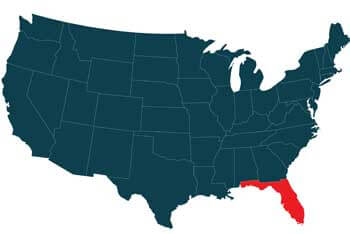 Florida generally bars ordinary vehicles from displaying red, red and white, or blue light visible directly from the front unless a statutory exception applies. Fla. Stat. § 316.2397(1). Blue is generally reserved for police, with narrow fire and correctional exceptions. Amber has the broadest work-vehicle authorization and is mandatory for wreckers during specified roadside recovery and loading. Flashing lights are otherwise restricted by § 316.2397(7).
| Vehicle or industry type | Permitted or required colors | Core rule or limitation | Statute or authority |
|---|---|---|---|
| Police vehicles | Blue; red and red-and-white as authorized emergency vehicles | Blue generally limited to police; red/red-and-white available to authorized emergency vehicles. | Fla. Stat. § 316.2397(2)(a), (3)(c) |
| Fire department and fire patrol vehicles | Red or red and white; limited blue | Blue only on qualifying government-owned fire vehicles over 24,000 lbs GVWR, rear only, with written chief authorization. | Fla. Stat. § 316.2397(2)(b), (3)(a) |
| Correctional agency vehicles | Blue | Department of Corrections or county correctional vehicles responding to emergencies. | Fla. Stat. § 316.2397(2)(c) |
| Ambulances, licensed medical staff, volunteer ambulance services | Red | Personal red-light use is limited to qualifying emergency response; specified users need the 16-hour EVOC course. | Fla. Stat. § 316.2397(3)(b); § 316.2398 |
| Volunteer firefighter private vehicle | Red or red and white | Written permit must be carried; use limited to qualifying emergency travel or the scene. | Fla. Stat. § 316.2398(1), (3) |
| Buses and taxicabs | Flashing red, two devices only | Two department-approved red devices, one front and one rear, shine on the roadway to signal an emergency inside. | Fla. Stat. § 316.2399 |
| Wreckers and tow operators | Amber - mandatory in defined circumstances | Amber required for roadside recovery/loading; flatbeds generally may not use it while hauling on the bed absent a protruding-object hazard. | Fla. Stat. § 316.2397(3)(e), (f) |
| Road and street maintenance, road service, refuse, petroleum tankers, mail carriers | Amber | Amber permitted when operating or when a hazard exists. | Fla. Stat. § 316.2397(4) |
| Road maintenance and construction equipment | Flashing white or white strobe; green, amber and red combination in some work zones | White flashing/strobe allowed; green-amber-red only in qualifying 55+ mph work zones while workers are present. | Fla. Stat. § 316.2397(5) |
| Utility and public service corporation vehicles | Amber | Amber during actual operation or a hazard, subject to the statutory travel restriction. | Fla. Stat. § 316.2397(3)(e) |
| Escort vehicles for oversize loads | Amber | Amber only while actually escorting qualifying overdimensioned loads. | Fla. Stat. § 316.2397(3)(f) |
| Private security vehicles | Green and amber | Green and amber during security duties; neither color may exceed 50 percent of displayed lights. | Fla. Stat. § 316.2397(3)(g) |
| Private passenger vehicles | Required lighting equipment; hazard flashers | No forward-facing red, red-and-white or blue outside exceptions; flashing limited to statutory uses. | Fla. Stat. § 316.2397(1), (7) |
What Florida prohibits by default
Florida's core prohibition is directional. Section 316.2397(1) makes it unlawful to drive a vehicle on a highway with any lamp showing red, red and white, or blue visible from directly in front, except for the vehicles the section names. It targets forward-facing color, which is why ordinary tail and brake lamps are unaffected.
Section 316.2397(7) separately prohibits flashing lights except for turn or lane-change signals, a lawfully stopped or disabled vehicle, intermittent headlamp flashing at oncoming traffic, extremely low visibility on roads posted 55 mph or higher, and lamps authorized elsewhere. Subsection (8) exempts police, fire and authorized emergency vehicles while performing necessary duties.
Blue lights: police, qualifying fire vehicles and correctional vehicles
Florida generally limits blue warning lights to police vehicles. Section 316.2397(2) also allows rear-only blue on qualifying government-owned fire vehicles over 24,000 pounds GVWR with written fire-chief authorization, and on Department of Corrections or county correctional vehicles responding to emergencies.
Section 843.081 separately makes unauthorized flashing or rotating blue-light equipment on a nongovernmentally owned vehicle or vessel unlawful, subject to narrow law-enforcement and licensed equipment-business exceptions.
Florida Attorney General Opinion 99-11 interprets § 843.081 to cover the presence of qualifying blue-light equipment even when it is not activated, and rejects personal use under the equipment-business exception.
Red and red-and-white lights
Florida authorizes red or red-and-white warning lights for specified fire, medical, ambulance and organ-transport uses. Section 316.2397(3)(a) covers fire and fire patrol vehicles, including qualifying volunteer firefighters; (3)(b) covers specified medical, ambulance, bus and taxicab uses; and (3)(d) covers organ transport vehicles.
Section 316.2397(3)(c) allows authorized emergency vehicles to use emergency lights and sirens in an emergency. Subsection (9) separately permits flashing red on emergency-response vehicles of the Fish and Wildlife Conservation Commission, Department of Environmental Protection and Department of Health while responding in the line of duty.
Section 316.2399 separately allows buses and taxicabs two department-approved flashing red devices, one front and one rear, shining on the roadway beneath the vehicle to signal an emergency inside.
Amber lights in Florida
Florida statutes use amber, rather than yellow, for these work-vehicle authorizations. Amber is the broadest warning-light color authorization in § 316.2397 and the only color that section expressly makes mandatory in a defined operating circumstance.
Section 316.2397(3)(e) allows wreckers, mosquito-control vehicles, and emergency vehicles of governmental departments or public service corporations to display amber while operating or when a hazard exists. Those lights generally may not be used merely traveling to or from the scene without specific law-enforcement authorization.
Wreckers and roadside recovery
Florida requires wreckers to use amber rotating or flashing lights during roadside recovery and loading, day or night, under § 316.2397(3)(f). A wrecker may also use amber while towing on wheel lifts, slings or under reach when the operator deems it necessary.
A flatbed, car carrier or rollback may not use those amber rotating or flashing lights while hauling a vehicle on the bed unless protruding objects create a hazard.
Road service, refuse, petroleum and mail fleets
Section 316.2397(4) allows amber on road or street maintenance equipment and vehicles, road service vehicles, refuse collection vehicles, petroleum tankers and mail carriers when operating or when a hazard exists. Log or pulpwood vehicles may display amber at the rearmost point.
Utility and public service vehicles
Florida allows amber warning lights on qualifying public-service-corporation vehicles under § 316.2397(3)(e) while they are in actual operation or when a hazard exists. Road-service vehicles are separately covered by subsection (4). Utility service vehicles are also protected by Florida's Move Over Law when performing roadside utility work.
Escort vehicles
Florida permits escort vehicles to display amber only while actually escorting overdimensioned equipment, material or buildings as authorized by law under § 316.2397(3)(f). That subsection does not itself create a general amber-light authorization for an escort vehicle when it is not engaged in the qualifying escort activity.
Road maintenance, construction and work zones
 Florida permits road-maintenance and construction equipment and vehicles to display flashing white or white strobe lights when they are operating and a hazard exists under § 316.2397(5).
One exception is distinctive: construction equipment in a work zone on roadways posted 55 miles per hour or higher may show a combination of flashing green, amber and red lights, in conjunction with periods when workers are present. It is unavailable on lower-speed roads or when workers are absent.
The same subsection allows school buses and farm-worker transport vehicles to display flashing white strobes.
Volunteer firefighters, medical staff and organ transport
Florida's rules for personal vehicles sit in § 316.2398. A privately owned vehicle belonging to an active firefighter member of a regularly organized volunteer firefighting company may display red or red and white warning signals while en route to the fire station to proceed to an emergency, or while at or en route to the scene.
Section 316.2398 requires these warning signals to be visible from the front and rear and bars inscriptions across the lens. A volunteer firefighter must obtain a written permit from the firefighting organization's chief executive officers and carry it whenever the signals are displayed.
Medical staff physicians and technicians of state-licensed facilities and volunteer ambulance service members may display red while responding to an emergency in the line of duty. An EMT, doctor or paramedic using a personal vehicle with a red light must complete a 16-hour emergency vehicle operator course. Organ transport vehicles may display red during qualifying transports.
Chapter 2025-94, effective July 1, 2025, removed an earlier numerical limit on § 316.2398 warning signals. The 2026 statute retains the visibility, permit, training and activity restrictions. A violation remains a nonmoving violation, and a volunteer firefighter who violates the section also faces mandatory dismissal.
Private security vehicles
Florida is one of the few states expressly authorizing warning lights for private security. Section 316.2397(3)(g) permits vehicles owned or leased by private security agencies to show green and amber, with either color no greater than 50 percent of the lights displayed, while personnel are engaged in security duties on private or public property.
The 50 percent rule is ETD's practical reading of the statutory text, not a separate quoted command. Section 316.2397(3)(g) authorizes green and amber together and says either color may be no greater than 50 percent of the lights displayed. The provision does not grant emergency-vehicle status or independent traffic privileges.
Green and purple warning lights in Florida
Florida expressly authorizes green as part of specified color combinations in two settings: private-security vehicles may display green and amber under § 316.2397(3)(g), and qualifying construction equipment in high-speed work zones may display green with amber and red under § 316.2397(5). Section 316.2397 does not expressly authorize purple warning lights for a vehicle class, and subsection (7) generally restricts flashing lights. Statutory silence on purple is not permission.
Sirens and emergency-vehicle status
Florida does not grant siren authority merely because a vehicle may display warning lights. Section 316.2397(3)(c) allows authorized emergency vehicles to use emergency lights and sirens in an emergency. Section 316.271(6) requires those vehicles to carry an approved siren, whistle or bell audible from at least 500 feet and limits use to an emergency call or immediate pursuit when reasonably necessary. Other warning-light authorizations do not themselves create emergency-vehicle status or siren privileges.
Florida's Move Over Law
Florida's Move Over Law covers authorized emergency vehicles, sanitation and utility vehicles, wreckers, road and bridge maintenance or construction vehicles, and qualifying disabled vehicles stopped roadside. Section 316.126(1)(b) identifies the triggering conditions, including displayed warning or hazard lights, emergency flares or signage, or visibly present persons at a disabled vehicle.
On a multilane road, Florida drivers must vacate the lane closest to the covered roadside vehicle when it is safe. If that cannot be done safely, or on a two-lane road, § 316.126 requires 20 mph below the posted limit when the limit is 25 mph or higher, or 5 mph when the posted limit is 20 mph or less.
Penalties for illegal lights in Florida
Florida uses two penalty tiers under § 316.2397(10). Paragraph (b) makes most violations a noncriminal traffic infraction punishable as a nonmoving violation under chapter 318.
Chapter 2025-36, effective October 1, 2025, increased the stop-attempt lighting offense. Current § 316.2397(10)(a) makes it a third-degree felony to violate subsection (1) while effecting or attempting to effect a stop of another vehicle. Section 775.082 permits up to five years' imprisonment and § 775.083 a fine up to $5,000.
Blue-light equipment is charged separately: unauthorized flashing or rotating blue-light equipment on a nongovernmentally owned vehicle or vessel violates § 843.081, an obstruction-of-justice offense carried as a first-degree misdemeanor.
A § 316.2398 violation is a nonmoving violation under chapter 318, with mandatory dismissal on top for a volunteer firefighter. A § 316.2399 violation is likewise a noncriminal infraction. A Move Over violation is a moving violation carrying a fine, fees and points.
Can civilians put flashing lights on a car in Florida?
In Florida, an ordinary private vehicle generally may not use flashing warning lights outside the statutory exceptions. Section 316.2397(1) bars forward-facing red, red-and-white or blue on vehicles outside the listed exceptions, and subsection (7) separately bars flashing lights except for specified uses.
Ordinary drivers may still use turn and lane-change signals, hazard lights for a lawfully stopped or disabled vehicle, intermittent headlamp flashes at oncoming traffic, and authorized flashing during extremely low visibility on roads posted 55 mph or higher.
Status-and-activity exceptions remain narrow. Section 316.2398 covers qualifying volunteer firefighters and specified medical or volunteer-ambulance personnel, while organ transport vehicles have their own red-light authorization. Amber authority likewise belongs to defined vehicle classes performing defined work, not to private vehicles generally.
Do you need a permit for warning lights in Florida?
No single statewide permit applies to every warning-light user in Florida. Most authority comes directly from vehicle status and qualifying activity under § 316.2397, while certain responder uses require written authorization or training.
Written authorization or training matters in three common cases: a volunteer firefighter must carry the written permit required by § 316.2398(1)(b); qualifying blue lights on a government-owned fire vehicle over 24,000 pounds require written fire-chief authorization under § 316.2397(2)(b); and an EMT, doctor or paramedic using a personal vehicle with a red light must complete the 16-hour emergency vehicle operator course.
Contacting the Florida Highway Patrol
Florida's statewide traffic enforcement agency is the Florida Highway Patrol, a division of the Florida Department of Highway Safety and Motor Vehicles. FHP publishes a mobile shortcut rather than a switchboard: dial *FHP (*347) to reach the nearest Regional Communications Center to report crashes, stranded or disabled motorists, impaired drivers or suspicious roadway incidents. Emergencies go to 911. See Contact FHP.
Questions about a volunteer firefighter permit go to the firefighting organization's chief executive officers, since that permit is issued locally.
Florida operators who cross state lines should compare these rules with Alabama and Georgia, the two states that border Florida, because warning-light authority changes at the state line.
For fleets working across the Southeast, related ETD statute pages include South Carolina, Mississippi and Tennessee, with all states available through the state emergency light statute index.
Frequently asked questions
Do tow trucks have to use amber lights in Florida?
Yes. Section 316.2397(3)(f) requires wreckers to use amber rotating or flashing lights during roadside recovery and loading, day or night. Amber may also be used while towing on wheel lifts, slings or under reach when the operator deems it necessary. A flatbed or rollback may not use those lights while hauling on the bed unless protruding objects create a hazard.
Are blue lights illegal in Florida?
Generally yes for a private or nongovernmental vehicle. Florida authorizes blue primarily for police, with narrow qualifying fire and correctional exceptions. Section 843.081 separately makes unauthorized flashing or rotating blue-light equipment on a nongovernmental vehicle or vessel a first-degree misdemeanor and covers equipment designed to display blue even when not operating.
Can private security vehicles use warning lights in Florida?
Yes. Section 316.2397(3)(g) permits vehicles owned or leased by private security agencies to display green and amber while personnel are engaged in security duties on private or public property, provided neither color exceeds 50 percent of the lights displayed.
What lights can construction vehicles use in Florida work zones?
Road maintenance and construction equipment may display flashing white or white strobe lights when in operation and where a hazard exists, under § 316.2397(5). In a work zone on a road posted 55 mph or higher, it may also show a combination of flashing green, amber and red during periods when workers are present.
What is the penalty for illegal emergency lights in Florida?
Generally a noncriminal traffic infraction under chapter 318. It becomes a third-degree felony under § 316.2397(10)(a) if the driver violates the forward-facing color prohibition and thereby effects or attempts to effect a stop of another vehicle; § 775.082 allows up to five years' imprisonment and § 775.083 up to a $5,000 fine. Unauthorized blue-light equipment is separately a first-degree misdemeanor under § 843.081.
Warning-light equipment for authorized Florida vehicles
For vehicle classes legally authorized to use warning equipment, ETD carries police lights, fire truck lights, amber warning lights, tow truck lights, utility vehicle warning lights, construction vehicle lights and LED light bar configurations. ETD also provides broader emergency vehicle and emergency lights resources. Product availability does not establish that a color or configuration is legal for a particular vehicle, operator or use.
Author: Chris Dallmann, Founder and Executive Owner, Extreme Tactical Dynamics. Chris Dallmann is the founder and executive owner of Extreme Tactical Dynamics. Since 2005, he has overseen ETD's work serving emergency responders, government agencies, towing companies, construction fleets, utility operators and other work-vehicle customers. He oversees ETD's state-statute content and compliance-research program.
About Extreme Tactical Dynamics
Reviewed by the ETD Regulatory Compliance Team.
Last updated: August 19, 2026
Last reviewed: August 19, 2026
Official sources (2026 Florida Statutes and official guidance): § 316.2397 · § 316.2398 · § 316.2399 · § 316.126 · § 316.241 · § 316.271 · § 775.082 · § 775.083 · § 843.081 · Ch. 2025-36 · Ch. 2025-94 · Florida Attorney General opinion on blue lights · FLHSMV Move Over guidance · Contact FHP
Disclaimer: This page provides general information about Florida emergency and warning-light laws and is not legal advice. The rule that applies can depend on the vehicle, operator, agency designation, location, equipment configuration and activity being performed. Local ordinances, agency rules, employer policies, permit conditions and private-property rules may impose additional requirements. Statutes, regulations and agency guidance can change. Confirm the current controlling requirements with the Florida Legislature, the responsible Florida agency or qualified legal counsel before purchasing, installing or using warning-light equipment.